Assortment mapping
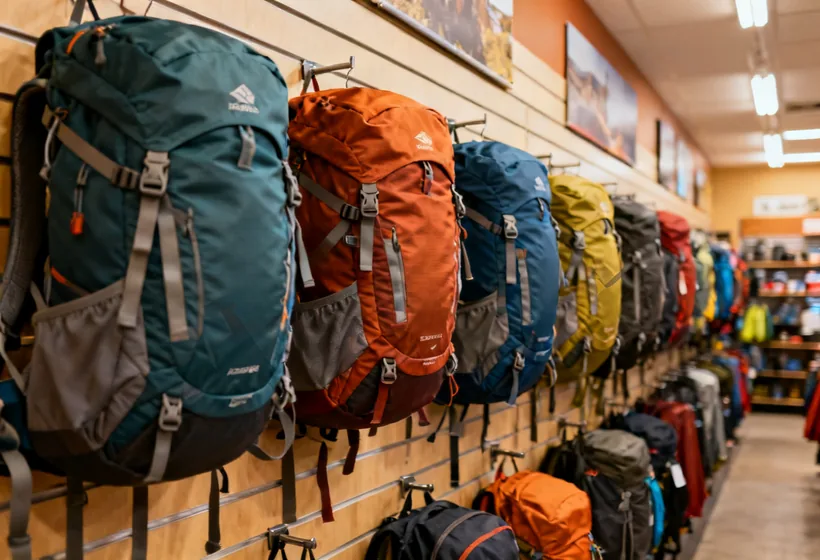
We place each SKU into a capacity band: 18-30L day, 35-50L weekend, 50-70L backpacking, plus duffels and hydration. The map stops a 22L crossover pack from being sold as overnight trail gear.
Buyers rarely need a motivational pitch. They need a sampling calendar, a clear MOQ, artwork rules, and a document list that matches the destination market. Champion runs outdoor-bag programs as a sequence: brief, sample, freeze, bulk.
Since 2012 the sampling room has kept torso-length fixtures, 1.5L to 3L dummy bladders, and a denier swatch wall so a retail buyer and an OEM brand manager can stand over the same pack. A stock wholesale order can move from the current line card. A private-label run waits for colorway approval, then a 12-18 working-day sample, then a 300-piece colorway minimum unless the brief says otherwise.
Request a program review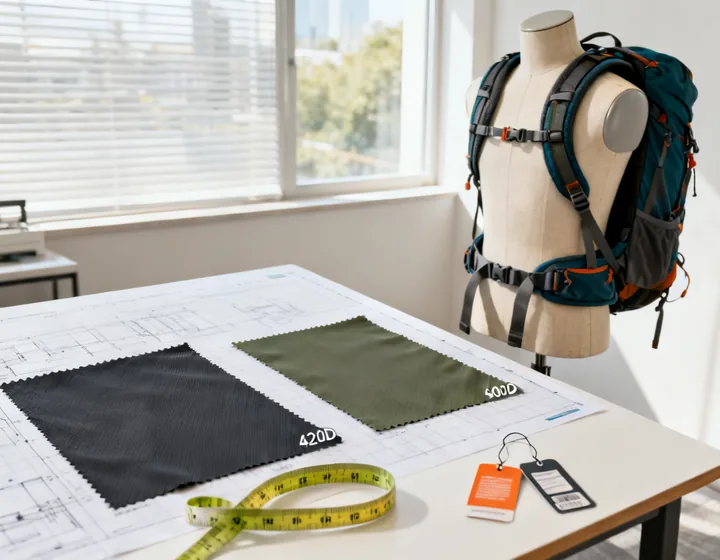
We place each SKU into a capacity band: 18-30L day, 35-50L weekend, 50-70L backpacking, plus duffels and hydration. The map stops a 22L crossover pack from being sold as overnight trail gear.
Frozen artwork enters the 2012 sampling room. Harness length, hip-belt padding and bladder sleeve width are checked on torso fixtures before a bulk marker is cut.
Logo, colorway, hangtag, polybag and carton marks. Typical opening quantity is 300 pcs per colorway. Screen print, heat transfer or woven labels are chosen against the fabric, not against a catalog slogan.
ISO 9001:2015, amfori BSCI summaries, OEKO-TEX STANDARD 100 on textile contact parts, REACH statements, and bluesign mill letters when that fabric is booked.
A North American outdoor retailer needed a 22L crossover daypack and a 40L travel duffel that could share zipper pulls and a sage accent without looking like the same SKU. Champion kept 420D ripstop on the daypack body and moved the duffel base to 1000D. The floor set launched with two colorways, not eight, because the buyer already knew which SKUs stalled in 2022. Sell-through notes after the first quarter showed the duffel outrunning the daypack in airport-adjacent stores, so the second drop added a grab-handle color only, not a new silhouette.
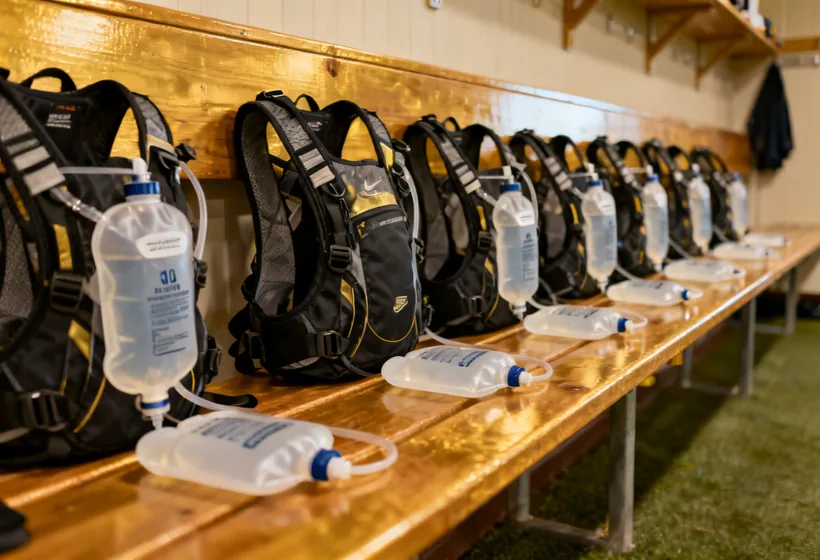
A European running club wanted 1.5L and 2L vest-style packs with a club mark. Screen print on 210D nylon cracked in the first wash tests, so Champion switched the mark to a heat-transfer panel on a 420D overlay. The club still received the vest silhouette they asked for. The limitation we recorded: 210D remains the right body fabric for bounce control, but it is a poor print surface for dense club crests. That note now sits on every hydration OEM brief.
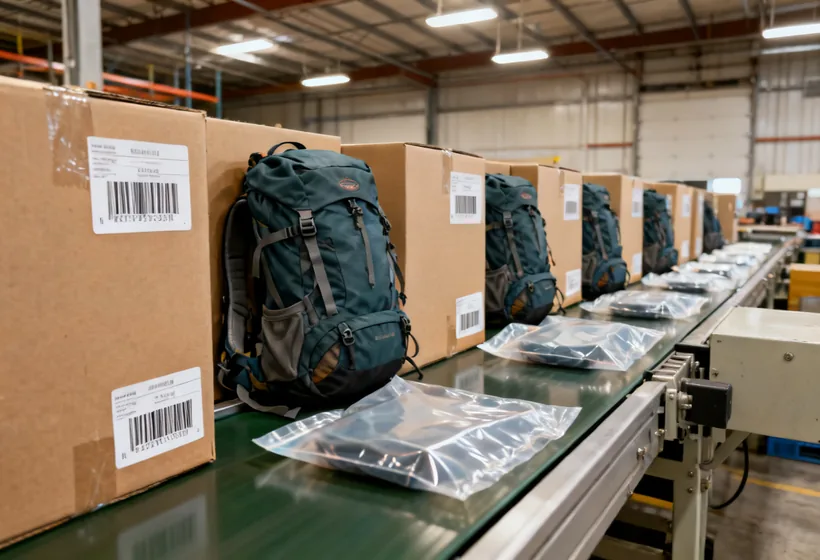
A distributor covering hiking shops in the UK and AU asked for a 55-65L pack with a ventilated back panel and a 600D body. Champion did not add a membrane. The brief called for a 1,500 mm PU coating because the price band could not absorb a 10,000 mm laminate. Rain covers were packed as a separate SKU. Five seasons later the same distributor still orders the PU version and keeps the membrane pack as a special-order line with a longer lead time.
Send the activity, destination market, target capacity and whether you need stock cartons or a private-label hangtag set. We will answer with a sampling window and a document list.